- headlessCMS
- DeveloperTools
- ContentInfrastructure
- B2BSaas
- Basic Identity
- Product Design
- Product Development
2024-WIP
 US )
US )Radiant is a headless CMS and dynamic content layer built for teams managing multiple web projects across brands, clients, or platforms. It offers powerful tooling like customizable form APIs, centralized file management, and structured content lists
MillisecondsAverage response TIME
Entriesof forms processed Weekly
UptimeUptime over the last year
FasterContent Deployment over legacy cms
Existing CMS solutions often force teams to choose between developer flexibility and content manager usability. Radiant was created to offer the best of both - an API-first backend with intuitive tools for managing lists, routing inquiries, and controlling file storage across multiple live projects.
The product needed to feel light but powerful - avoiding legacy CMS bloat while giving full control over how data is structured, accessed, and routed across frontend apps.
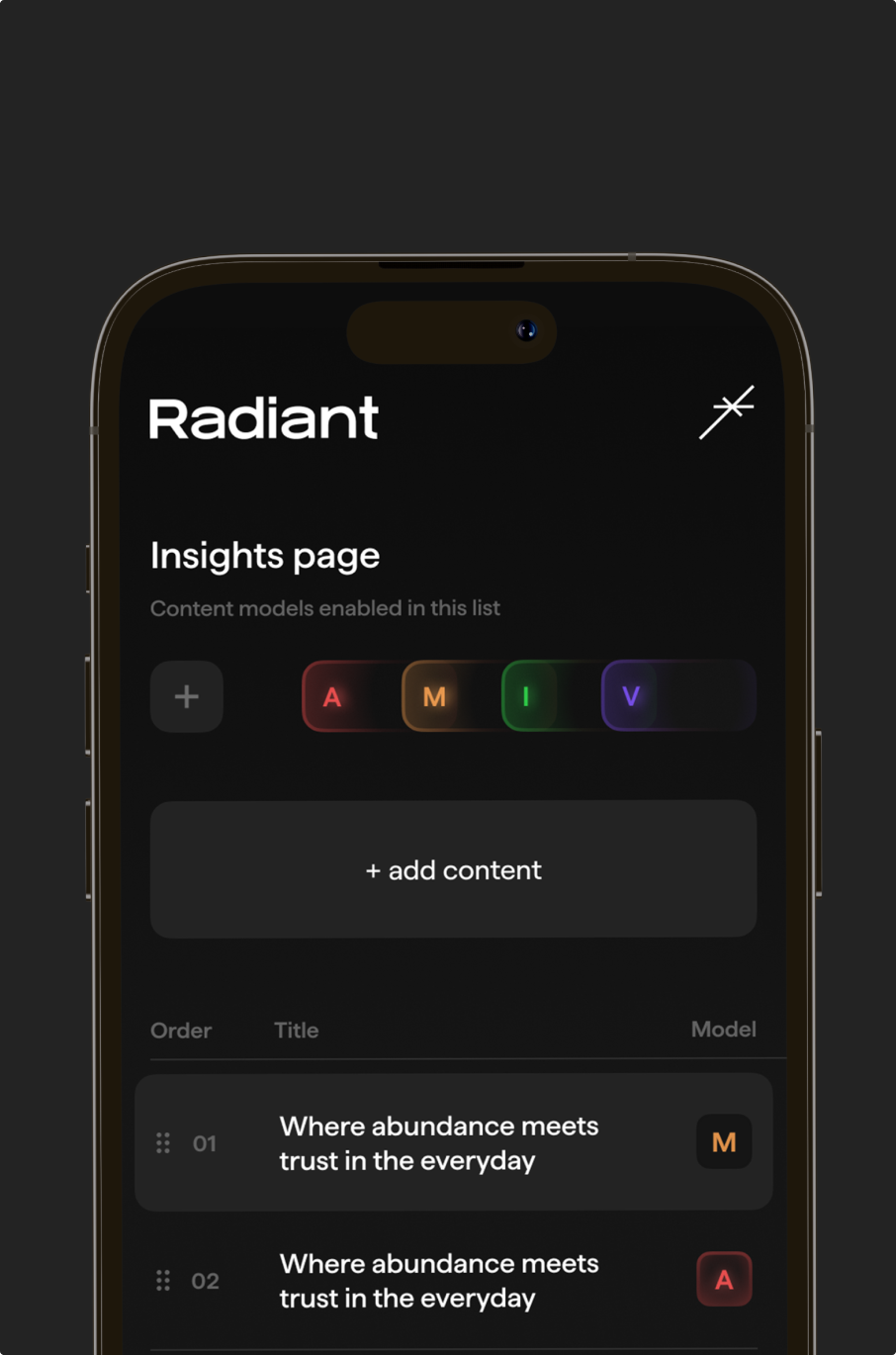
Radiant includes prebuilt endpoints for subscription inquiries and lead capture, as well as tools to custom-build forms that send structured data into the CMS - with full visibility on every entry.
The built-in storage dashboard makes it easy to upload files once and reuse them across multiple components and websites - reducing bloat and streamlining workflows.
Structured, Transparent, and Built for Speed
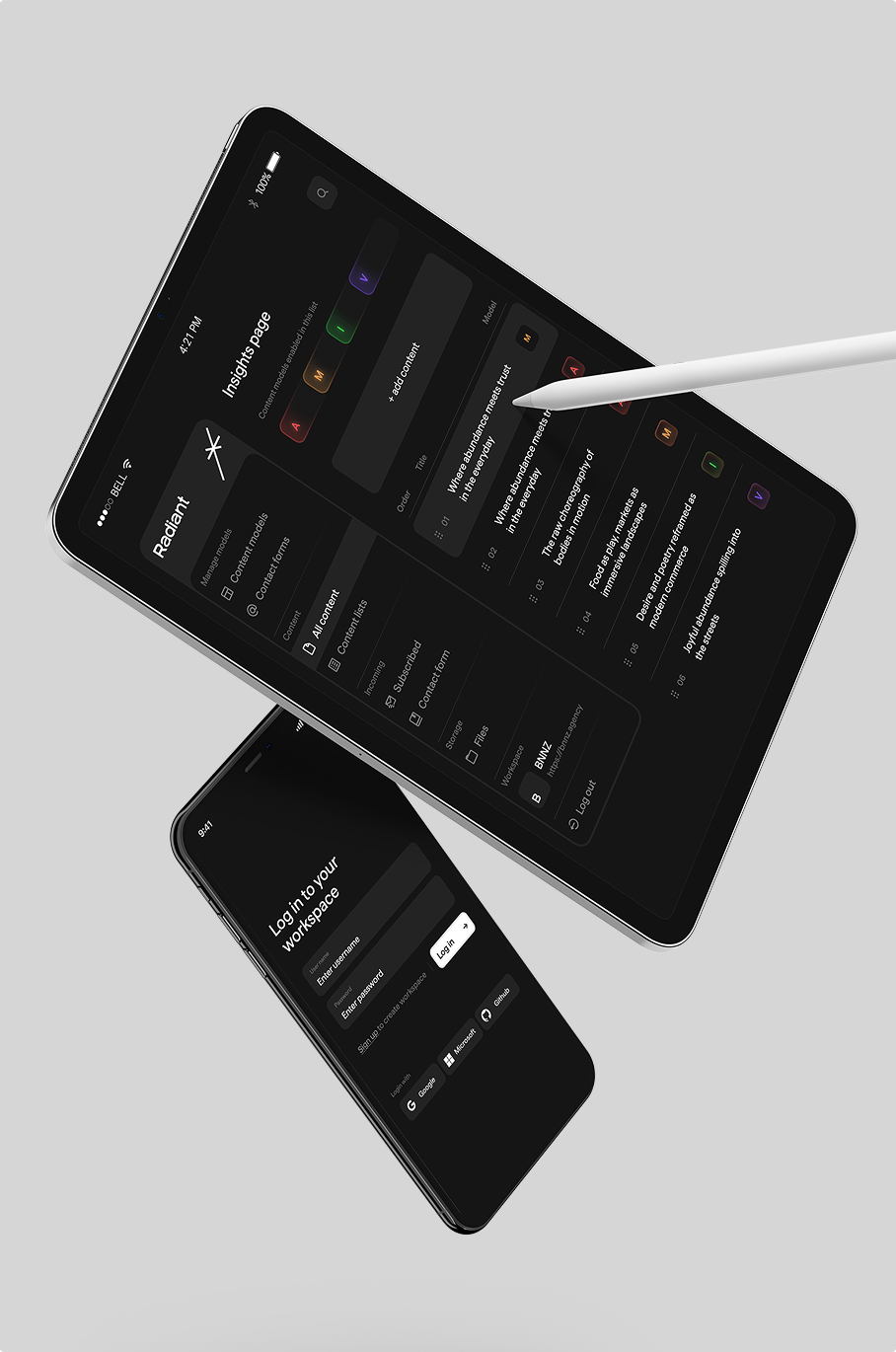
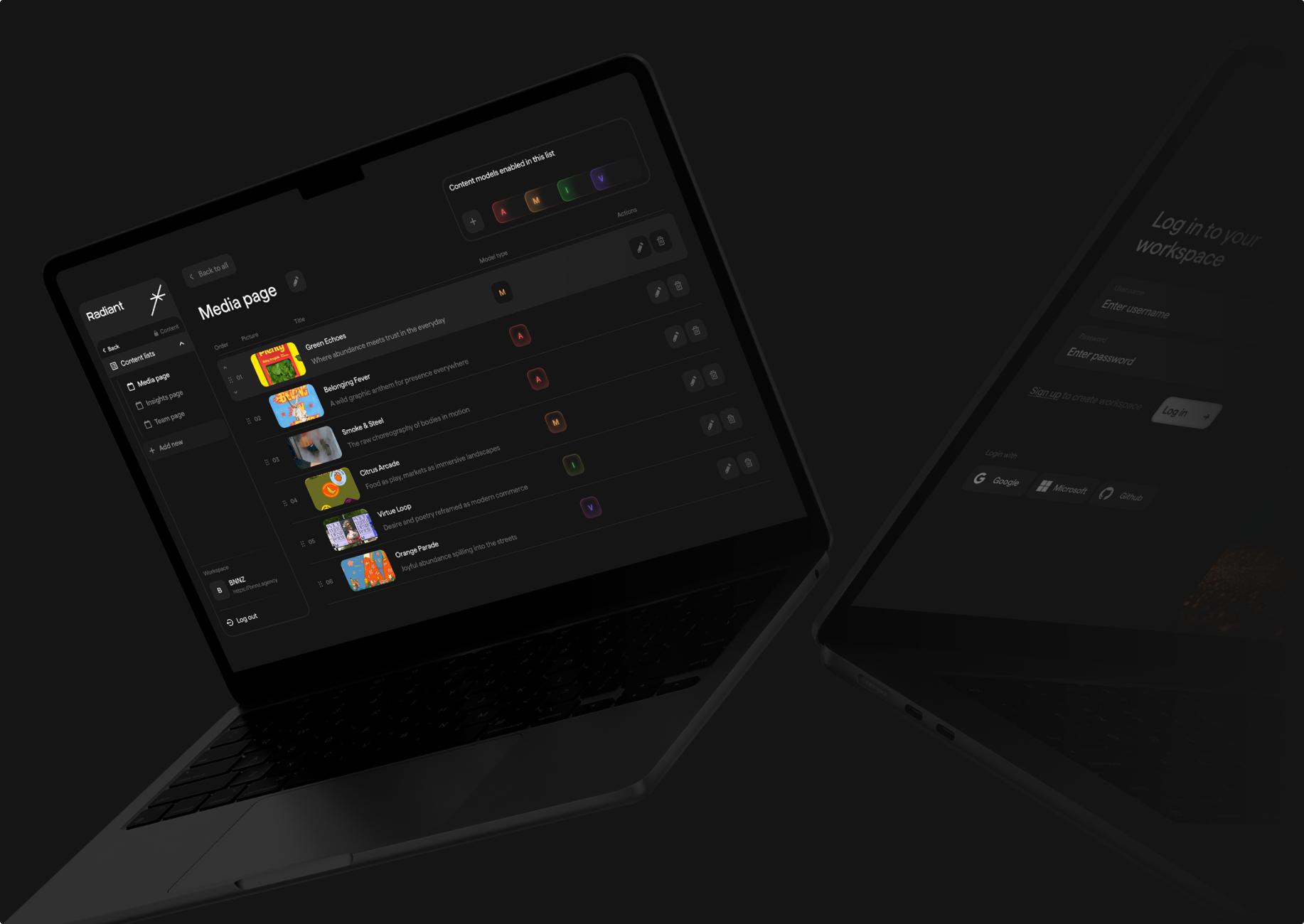
Radiant’s interface is built around the speed of use - with clean panels, dark/light modes, and an emphasis on clarity over decoration.
Tables and list views are fast and searchable, schema configuration is visual and frictionless, and form/webhook management is streamlined for real-world usage.
The design system scales across desktop and mobile, with attention to layout consistency and accessibility - supporting developers, editors, and technical marketers equally.
Used for headlines works best with big titles

Used for Web app works best with regular text buttons

API-First by Design
Radiant is built in C#/.NET, with a focus on delivering ultra-fast, cache-optimized REST APIs. Every content block, list, or form entry is accessible via dynamic endpoints - giving frontend teams full flexibility across React, Vue, Svelte, or static site stacks.
The file storage layer ensures deduplication and reuse, while every inquiry submitted through connected forms is available instantly via the CMS - with sorting, tagging, and export capabilities built in.
Security, logging, and user permissions are built into the core, and the system supports environment-specific API keys, project-level access control, and activity logs to ensure content and data remain protected at all times.
next js
typescript
aws
docker
terraform
c#
- SaaS
- Travel
- Digitalmapping
- B2C
- Basic Identity
- UI/UX
- Cross Platform App Development
2018
 Denmark )
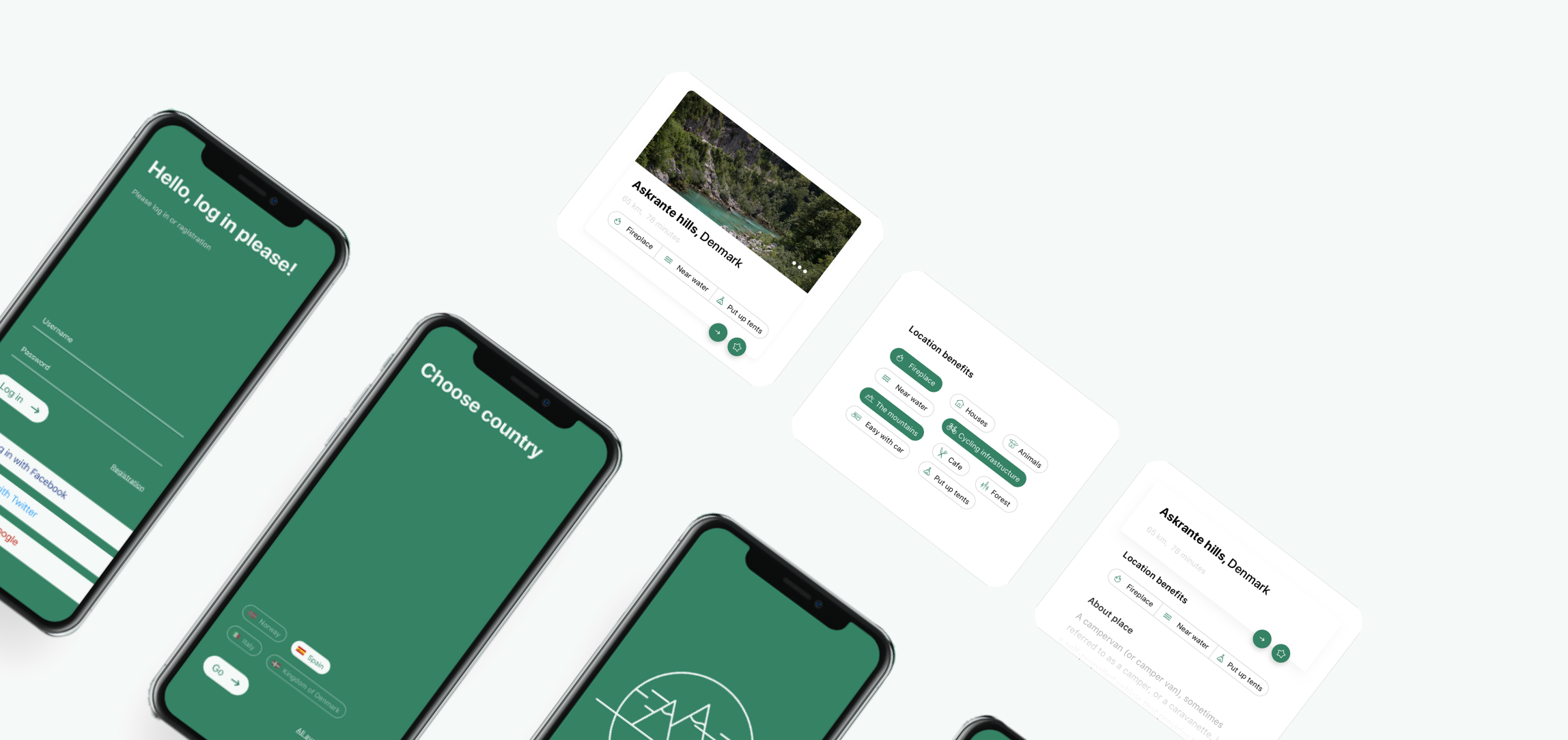
Easy Camper is a global camping map platform, helping travelers discover camping sites, filter by amenities, and plan custom travel routes - all in one seamless experience
CampsitesListed at launch
UsersPlanned Multi-stop trips
MobileTargeted usage
minutesAverage session time
Camping travel planning is traditionally fragmented across outdated websites, guidebooks, and word-of-mouth.
Easy Camper’s challenge was to bring everything together into a single, user-friendly platform where travelers could search, filter, plan, and book their entire journey effortlessly — from finding the perfect site to mapping their route.
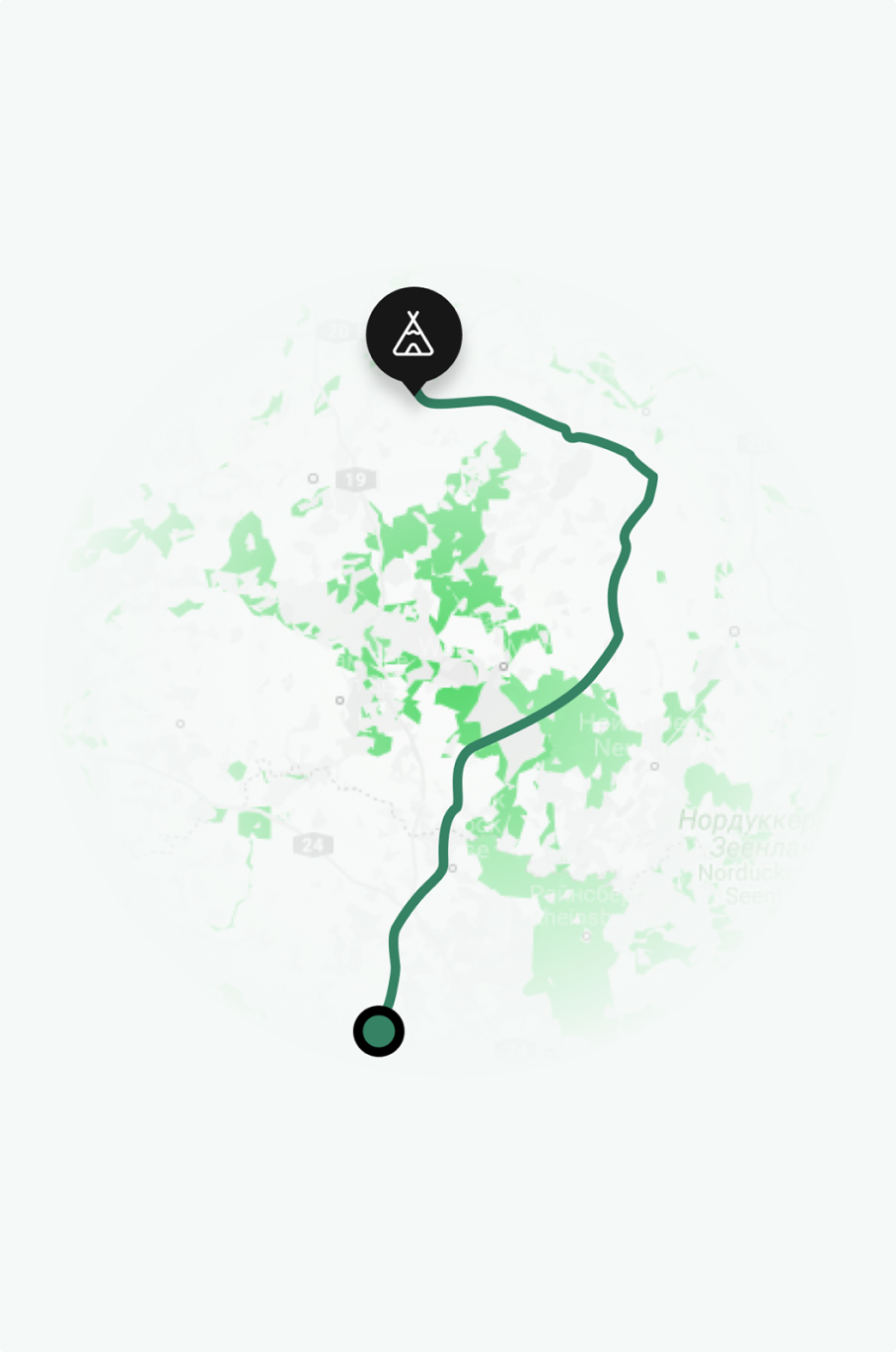

Clear, Flexible, Adventure-Ready
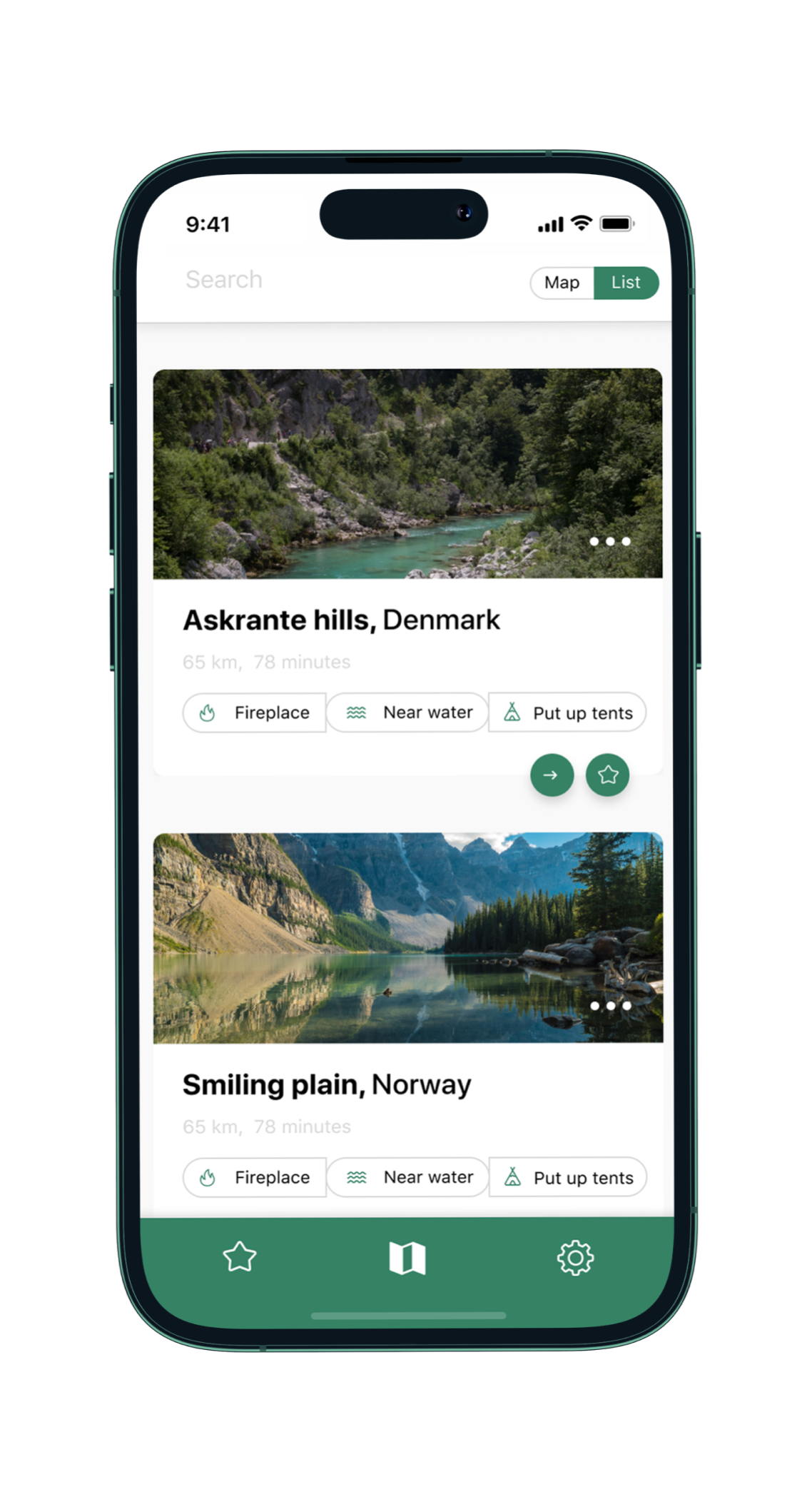
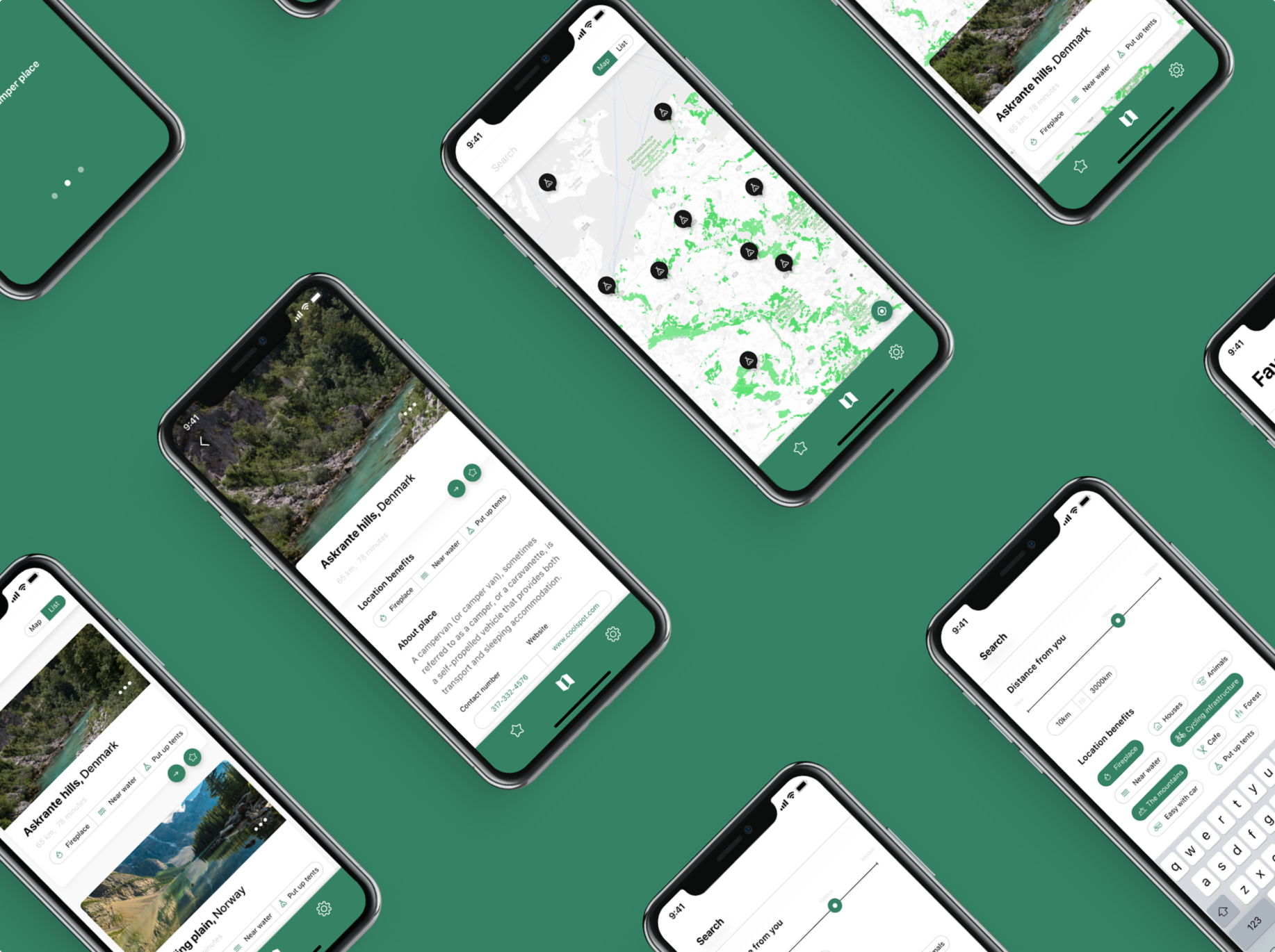
The design of Easy Camper emphasizes a light, open, and accessible aesthetic, encouraging exploration and spontaneity.
A map-first layout keeps the focus on discovery, while clear filters and clean typography make route planning feel intuitive and exciting. The visual language balances a sense of freedom and structure, helping users plan confidently without losing the spirit of adventure.
Used for headlines works best with big titles

Used for Web app works best with regular text buttons

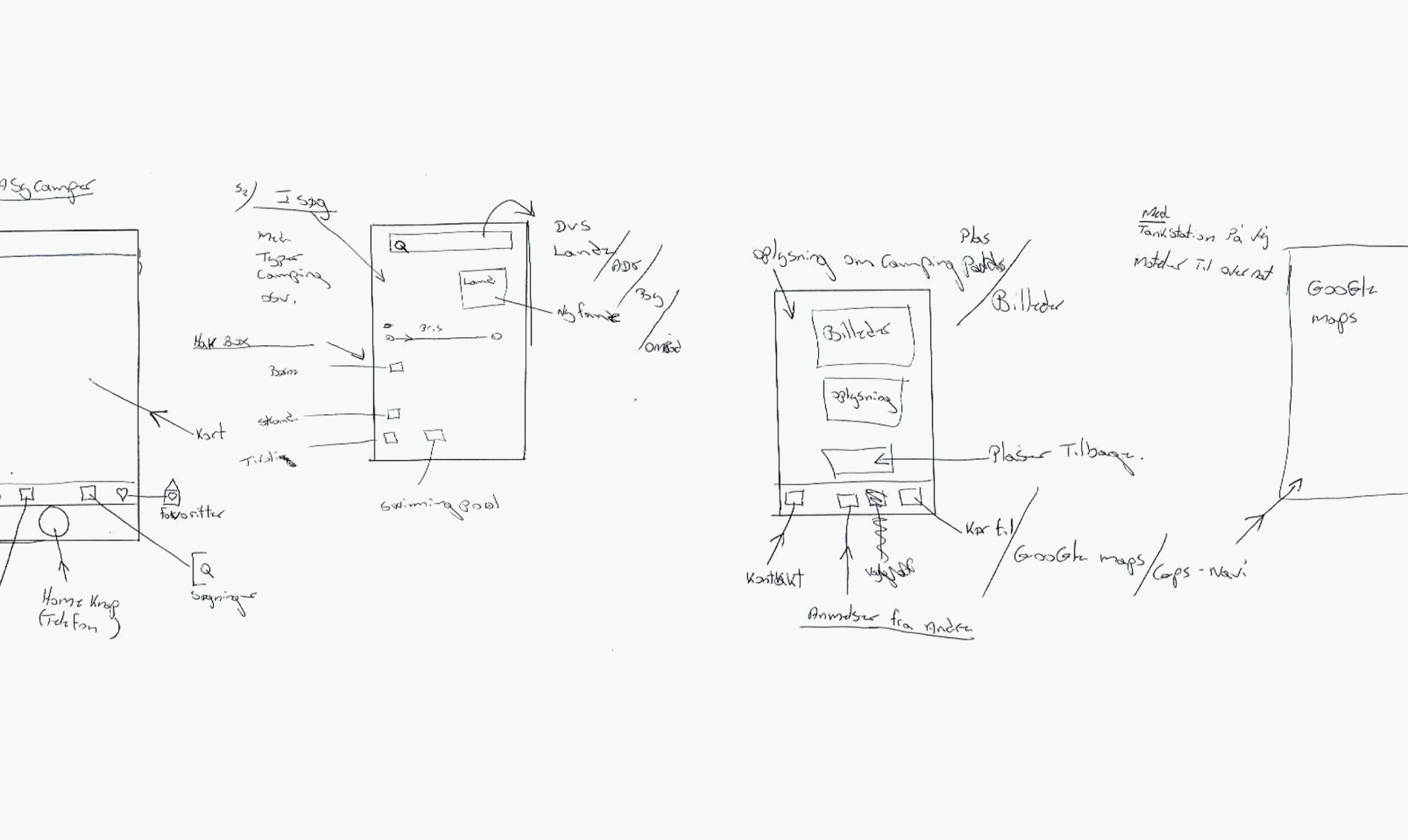
Bringing Global Exploration to Every Device
The Easy Camper platform was developed as a responsive web app, optimized for mobile devices where most users plan on the go.
A dynamic map engine powers real-time searches and route building, while the backend handles campsite data management and user trip planning histories. Scalability was a priority, ensuring the platform could expand from Denmark to worldwide coverage without friction.
react
node js
aws
docker
mongo db